

Kingfisher Photography is not just about capturing a bird — it’s about surrendering to patience, silence, and the rhythm of nature itself. As I sat hidden in stillness once again, I felt that familiar anticipation returning, the quiet thrill of waiting for a flash of blue to pierce the muted world around me.
Returning to the Hide
Kingfisher Photography drew me back to the hide in early February, guided by a quiet longing I couldn’t ignore. The sky was heavy with clouds, and a gentle rain whispered through the landscape. It wasn’t the kind of weather most would hope for — but for me, it felt perfect.
In this soft, diffused light, the world loses its harsh edges. Colors become richer, shadows gentler, and the subject — in this case, the kingfisher — emerges with a kind of delicate clarity that bright sunlight often steals away. Through my telephoto lens, I could already imagine how beautifully the bird would separate from its surroundings, painted in subtle tones rather than sharp contrasts.
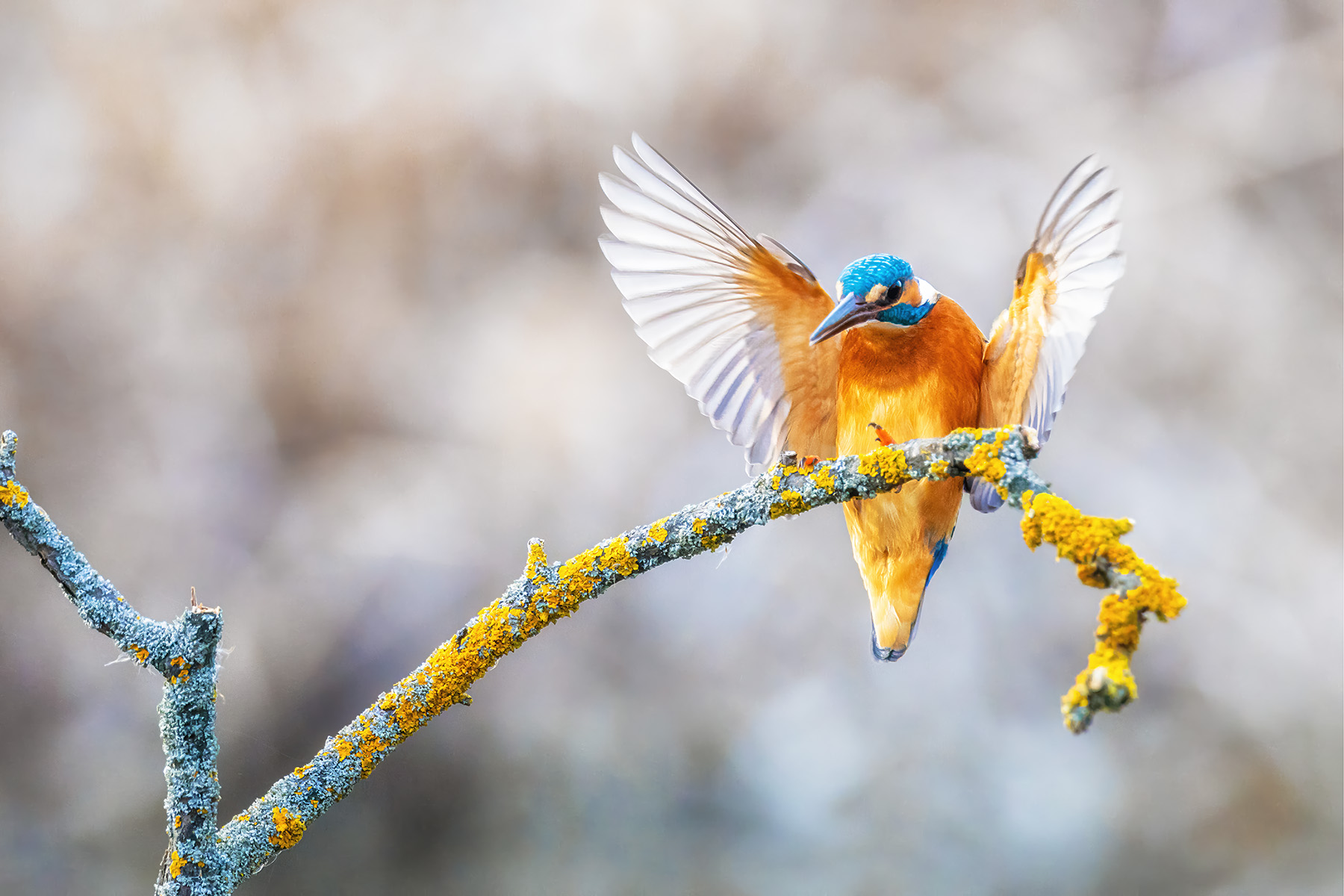
Kingfisher Photography and the Solitary Hunter
Kingfisher Photography, however, is never only about light — it is also about patience, and sometimes, quiet concern. This time, only the male appeared. The female, I was told, had been missing for weeks. The thought lingered heavily in the background, adding a subtle sadness to the stillness of the hide.
The male returned roughly once every hour, a fleeting presence of electric blue. He would dive, catch a fish, and disappear again into the safety of the reeds to consume his prize. Each visit felt like a brief gift — a moment of life unfolding in its purest, most instinctive form. And between those moments, there was only waiting… listening… breathing with the landscape.
Capturing Reflections
Kingfisher Photography, for me, is not complete without reflection — both literal and emotional. I carefully composed my frame to include not just the bird, but its mirrored presence on the calm surface of the water.
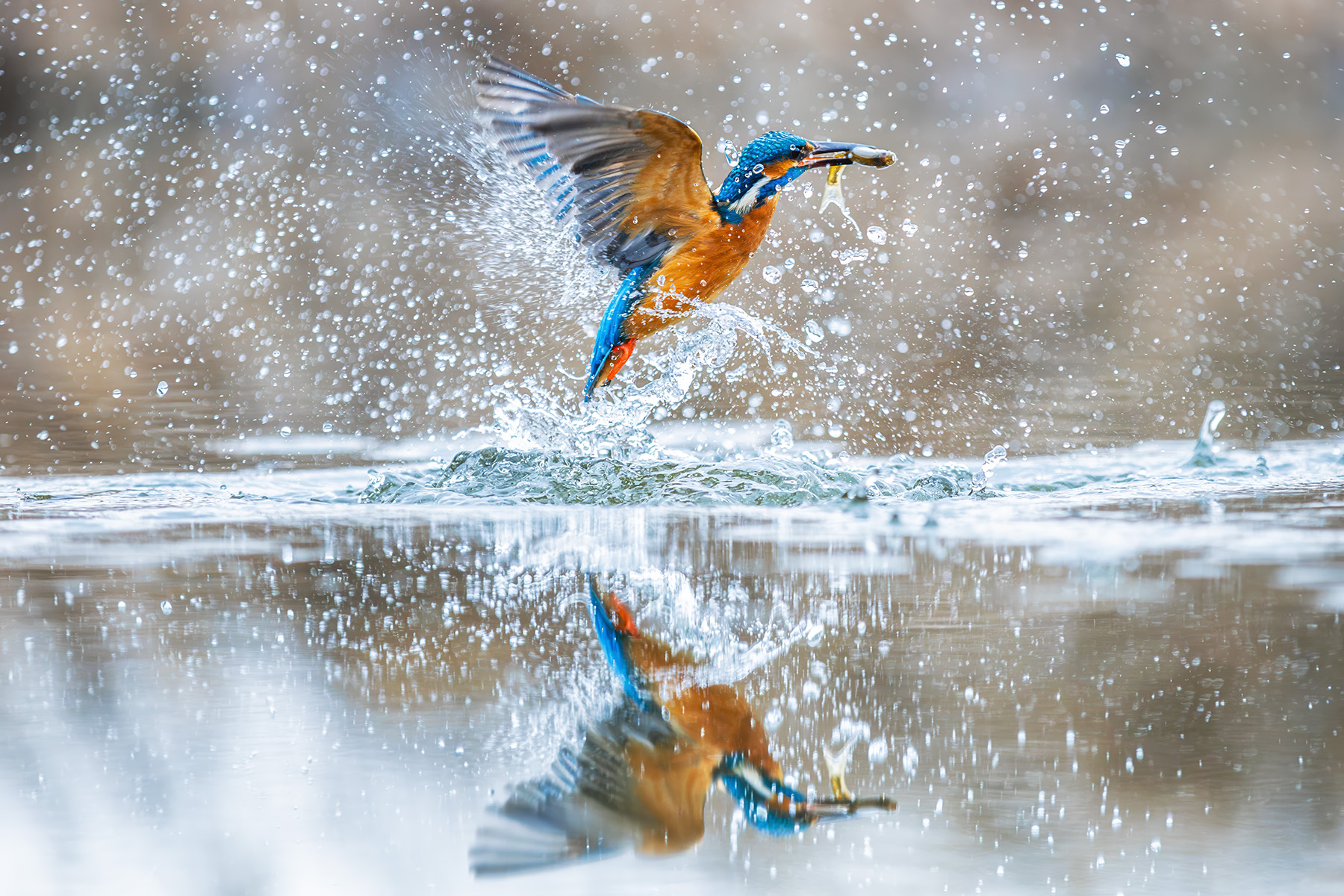
There is something deeply poetic about that reflection. The stillness of the water transforms a fleeting second into something almost eternal. When the kingfisher perched, its reflection rested beneath it like a silent twin. And when it struck — when it became that living arrow diving into the water — the reflection shattered into ripples and light.
With my Canon R6 Mark II, capable of capturing up to 40 frames per second, I felt more prepared than ever. What once relied heavily on luck now leaned more toward timing, intuition, and understanding the bird’s rhythm. And on this day, something clicked. From the very first series, I captured frames that held both motion and harmony — wings mid-beat, water splashing, reflections dancing.
The Art of Movement in Kingfisher Photography
Kingfisher Photography is, at its core, the art of freezing something almost too fast for the human eye to follow. This tiny hunter moves with astonishing precision — a perfect balance of speed and control.
Throughout the day, I was able to document a full story. The quiet portraits, where the bird sat on its perch, scanning the water with unwavering focus. The sudden, explosive dives — a blur of motion followed by the elegant chaos of water droplets suspended in air. And the returns, when it landed once more, carrying its shimmering catch.
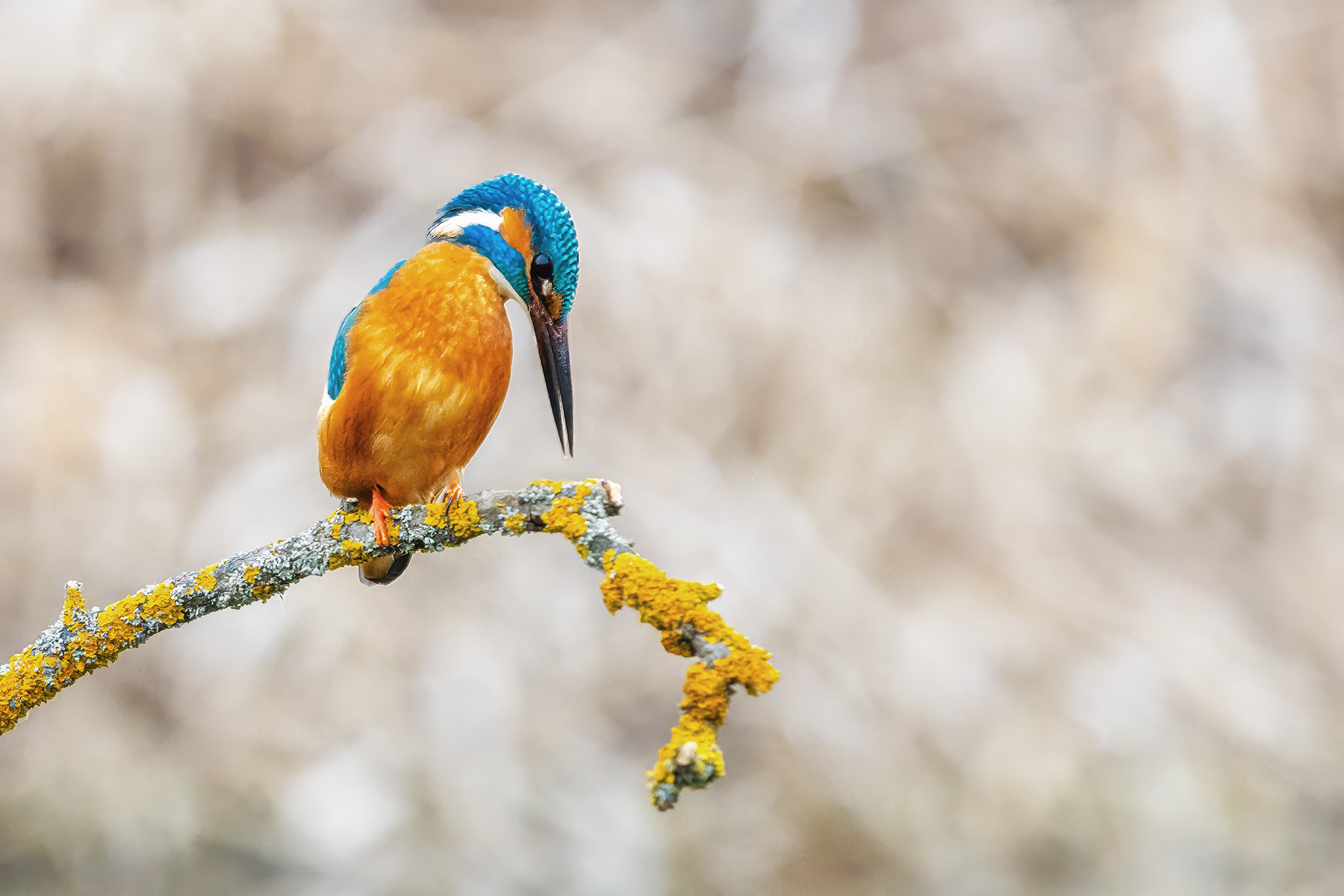
Each sequence felt like a chapter in a visual narrative. Not just images, but moments — fragments of a life lived with instinct and purpose. And as the hours passed, I realized that everything I had hoped for that day had quietly come true.
A Moment Beyond Kingfisher Photography
Kingfisher Photography often gives more than expected — sometimes not in the moment, but later, when you least anticipate it. I returned home feeling fulfilled, carrying with me a collection of images I was proud of.
But what I didn’t know then was that one of those photographs would soon find its way into a wider world. Less than a month later, one of my kingfisher images was featured by National Geographic Magazine Hungary.
It’s a strange and beautiful feeling — when a quiet moment in nature, witnessed alone in silence, suddenly resonates with thousands of others. It reminded me that these small, patient hours in the hide are never just for me. They carry something universal.
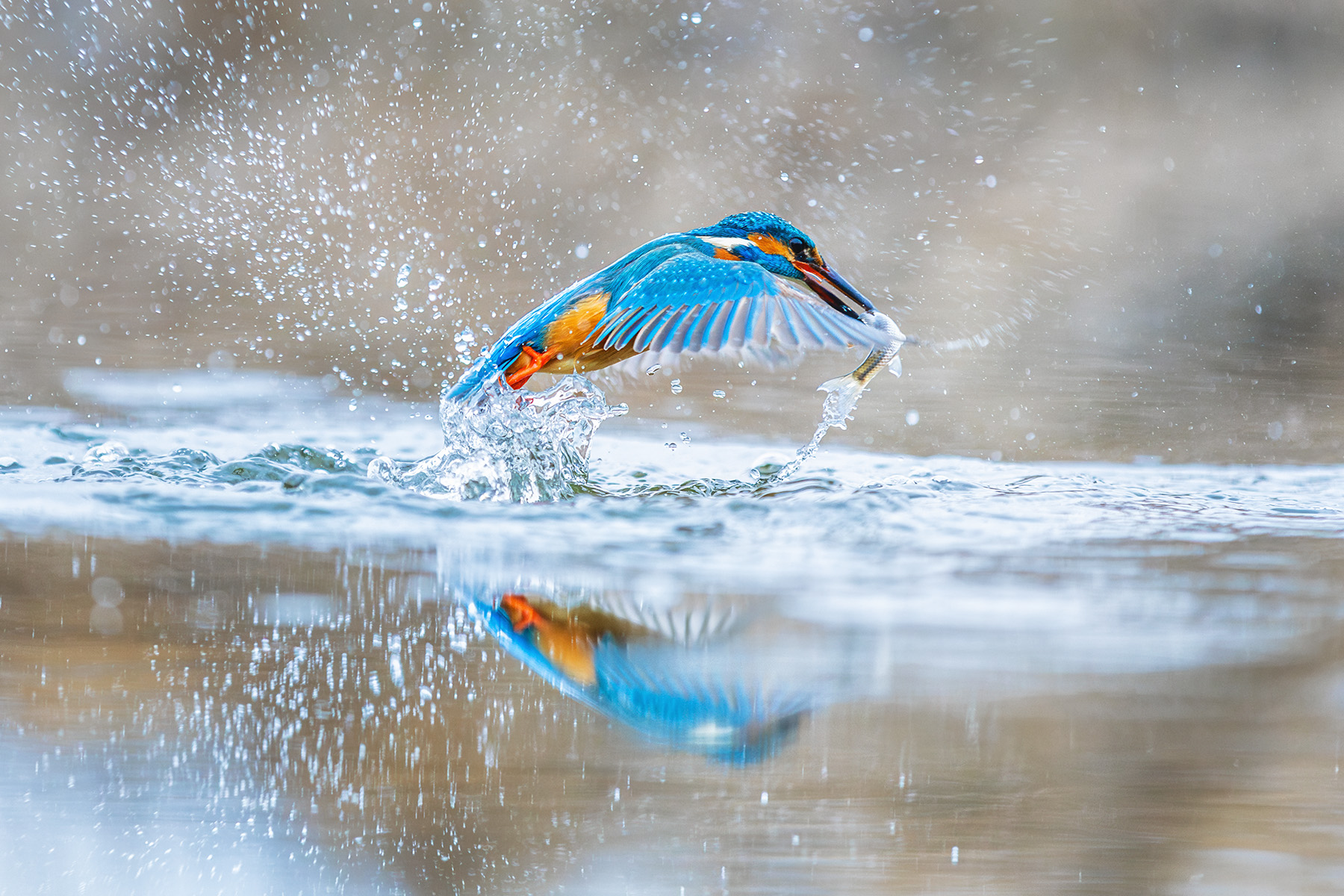
The Soul of Kingfisher Photography
Kingfisher Photography has taught me to see beyond appearances. Because when you look at this bird, you see two truths at once.
On one hand, it is a perfect predator — precise, fast, unstoppable. A living arrow cutting through air and water with flawless accuracy. On the other hand, it appears fragile, almost delicate. A small, colorful creature that seems too light for the intensity it carries within.
That contrast is what fascinates me the most. Strength wrapped in beauty. Power hidden in elegance. And every time I see it, I feel that quiet sense of wonder returning.
I know I will return again. I hope that next time, the missing female will reappear, and together they will build something new — a small family continuing the cycle of life along the water’s edge.
Summary
Kingfisher Photography is a journey of patience, emotion, and connection. From the soft, diffused light of a rainy February day to the electric bursts of motion captured through the lens, every moment in the hide carried its own quiet magic.
This experience was not only about photographing a bird — it was about understanding its rhythm, respecting its space, and embracing the stillness required to witness something extraordinary.
And as I look back on that day, I realize that the true beauty of Kingfisher Photography lies not just in the images created, but in the moments felt — fleeting, silent, and unforgettable.
If you’re as captivated by this topic as I am, don’t miss out on exploring more insights in my other topics and contents in my Portfolio!