

Crane migration is one of the most spectacular autumn wildlife events you can experience in Hungary. When thousands of birds rise from their nighttime roost before dawn and return across a burning sky at sunset, Hortobágy becomes a place of movement, sound, and raw natural beauty. This year, we spent an entire day inside photography hides to finally experience this incredible spectacle for ourselves.
Crane migration in the Heart of Hortobágy
The autumn Crane migration is one of the great natural spectacles of the Hungarian plains. During the migration period, enormous numbers of Eurasian cranes pass through Hungary, and Hortobágy National Park provides them with a crucial feeding and resting area. The birds arriving here are traveling south from their northern and northeastern European breeding grounds toward warmer wintering areas, such as Israel or even France.
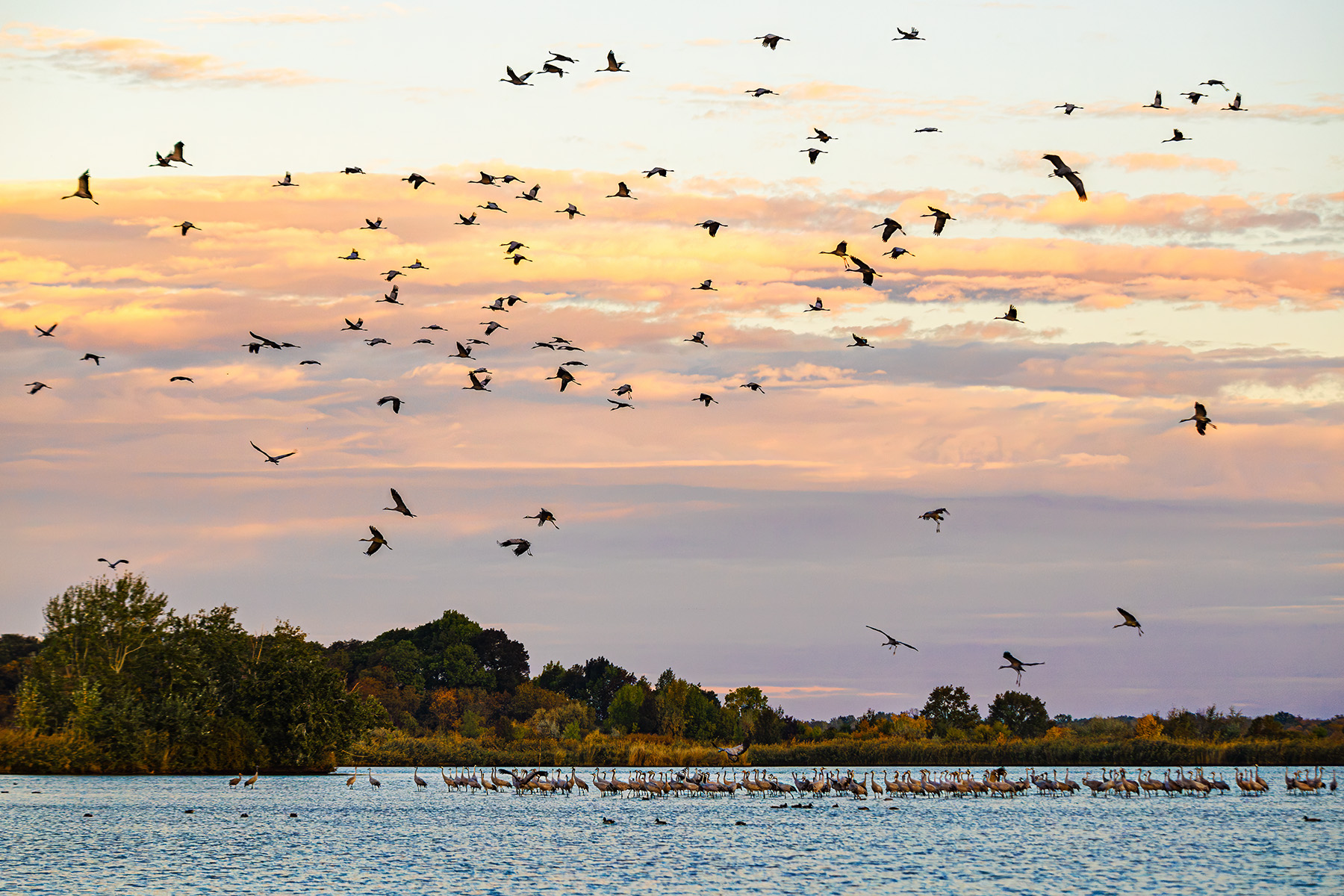
Their daily routine creates two particularly spectacular moments. They spend the night together in shallow wetlands, where standing water offers protection from predators. Around dawn, they leave their roosts and head toward surrounding agricultural fields to feed. Then, as daylight fades, the process reverses. Flock after flock appears in the sky, often forming characteristic lines and V-shaped formations as they return to the water.
We simply couldn't miss it. We dedicated an entire Friday to photographing the cranes and, with the help of a local guide, planned to observe them from several different hides between dawn and sunset.
Our Journey Started Before Dawn
Our journey began the evening before, although somewhat later than intended. By the time we reached our accommodation in Hajdúszoboszló, it was already around midnight. That was when I discovered that, in the rush of packing, my spare camera battery had remained at home in another bag. Not exactly ideal preparation for an entire day of wildlife photography.
Fortunately, there was a solution: a power bank and USB-C charging. Sometimes technology really does save the day.
At 4:00 a.m., the alarm went off. We tried to bring ourselves back to life with hot coffee while preparing the equipment. Despite turning 54 the following day, I had never witnessed the Crane migration before, so tiredness was quickly replaced by anticipation. At 5:00 a.m., we met our local guide in Balmazújváros and headed toward the first hide.
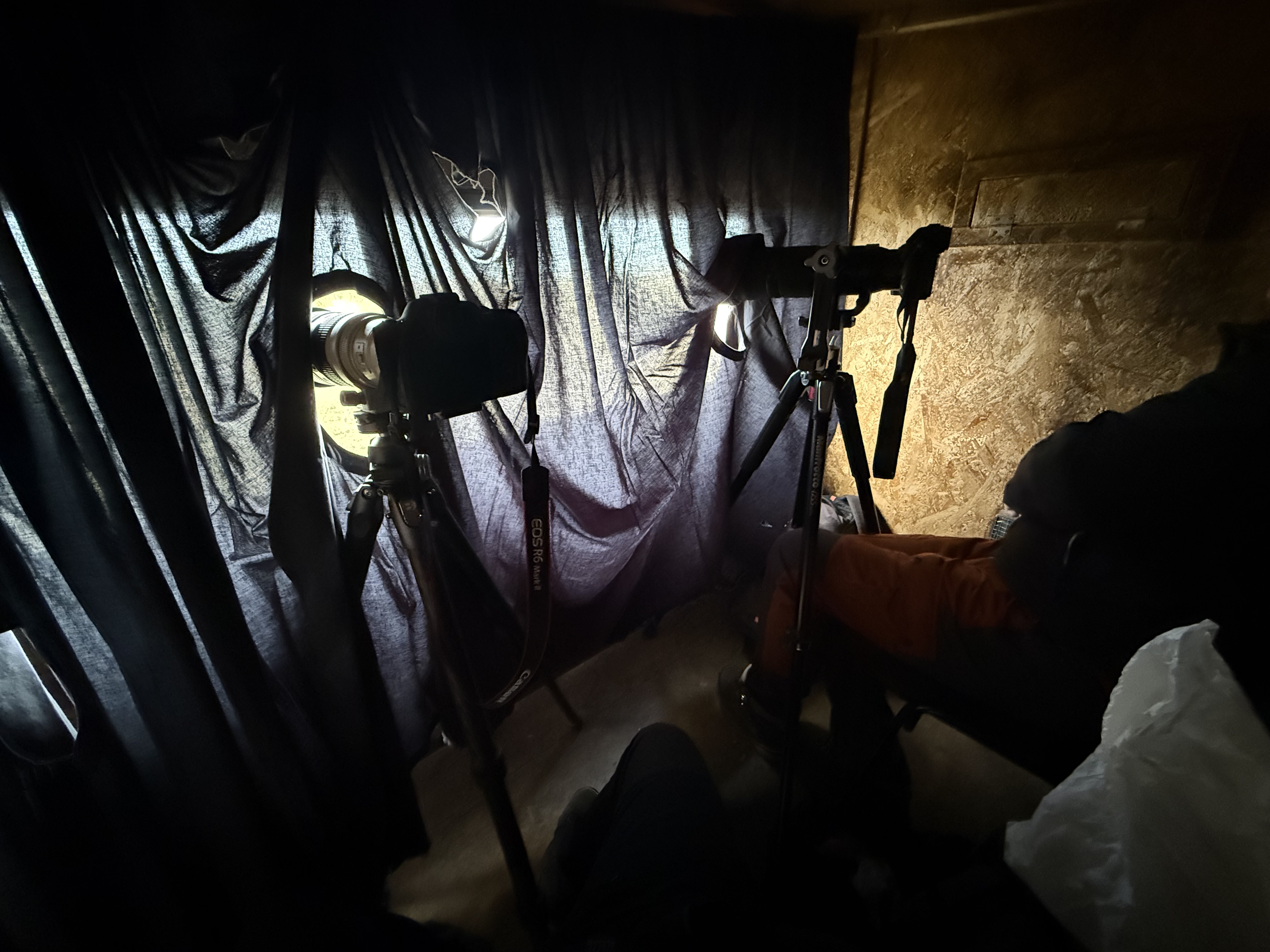
We entered as quietly as possible. Hidden among reeds near the water, we were relatively close to the cranes' nighttime roost. Around six o'clock, the wetland began to awaken.
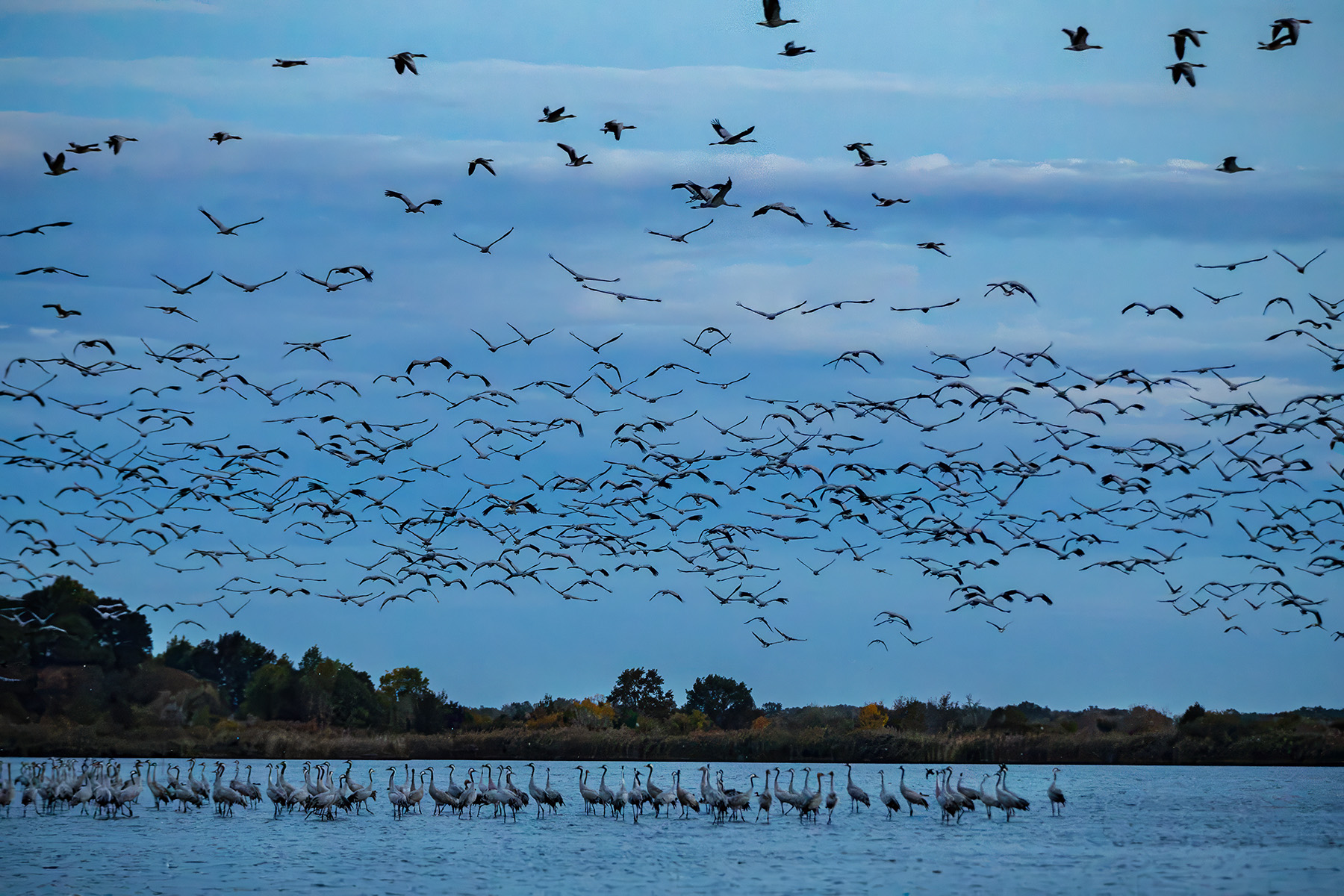
There was barely any light. Everything was immersed in the deep blue tones of dawn, forcing me to push the camera sensitivity as high as ISO 25,600. But what the landscape lacked in light, it compensated for with sound. The reeds and water were alive with the calls of thousands of waking cranes.
And then suddenly, they rose.
Thousands of birds seemed to take flight almost simultaneously. The sky filled with cranes in a breathtaking explosion of wings and sound.
Photographically, I missed the best moment completely. I had fired a burst just before they took off, and my camera was still writing the sequence to the memory card when everything happened. By the time it was ready again, the most dramatic seconds were gone.
But sometimes seeing the moment matters more than photographing it.
Bird photography of Cranes from the Hide
By around 7:30 a.m., the lake was almost empty, so we moved to another hide positioned beside the fields where the cranes feed during the day.
And then... nothing happened.
For hours.
We eventually started joking that we had booked ourselves into a crow hide. There were plenty of crows around, but almost nothing else. Wildlife photography is like that. Behind one spectacular image there may be many hours of staring through a small opening while absolutely nothing happens.
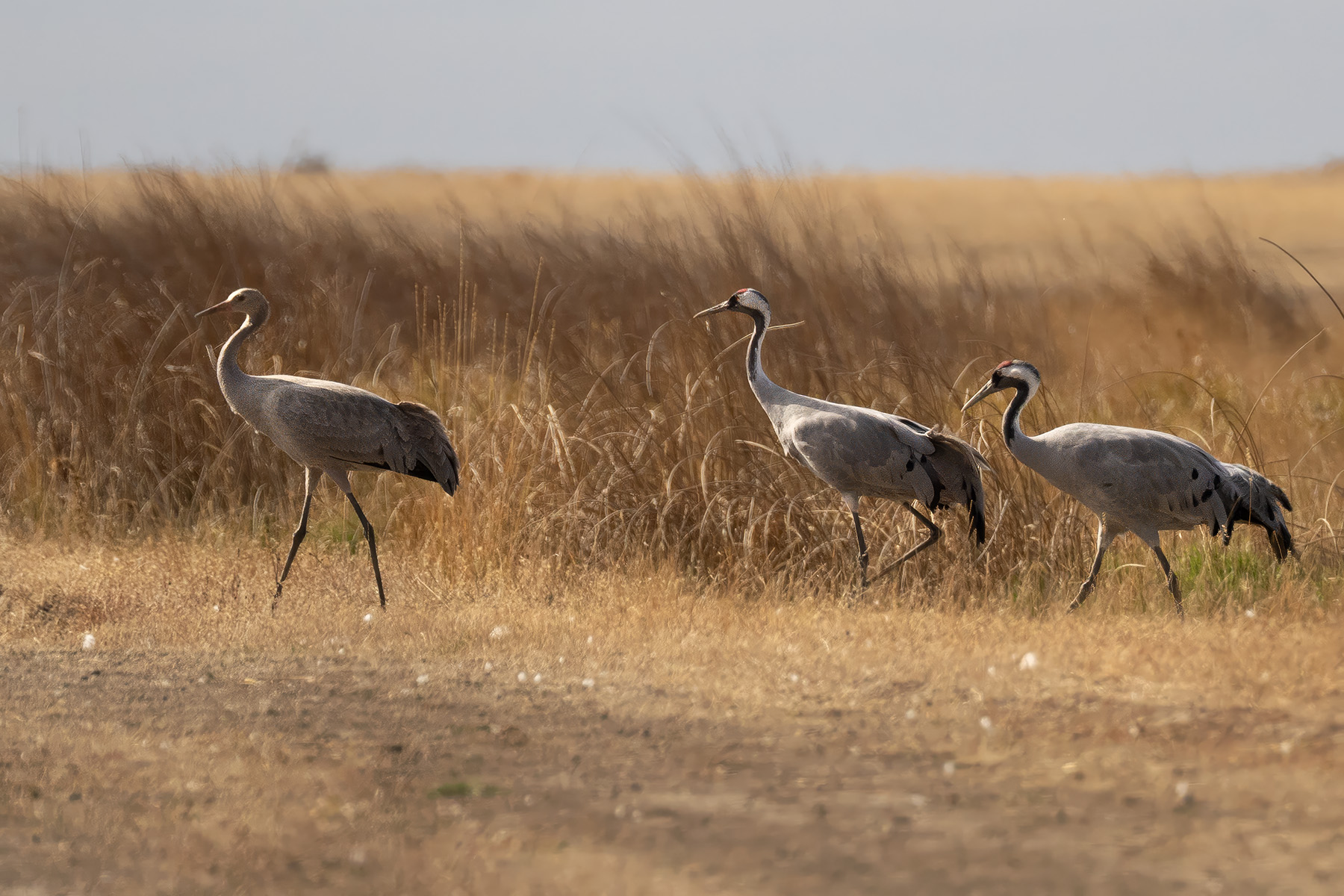
The cranes finally arrived around 1:00–1:30 p.m. We watched and photographed them feeding in the afternoon light, but this was also where I discovered the limitations of my equipment. For Crane migration photography, I would recommend bringing the longest telephoto lens possible. In my experience, 400mm is rather short, 600mm begins to feel useful, while something around 800mm would be ideal for close portraits from these distances.
I only had 400mm available — a 200mm lens combined with a 2x extender — and honestly, it wasn't enough for the portraits I had imagined. Still, I managed to capture several interesting behavioral images and wider environmental frames.
At around 3:30 p.m., the cranes disappeared again. We climbed out of the hide to stretch our legs, which had become painfully stiff after so many hours of sitting.
The best part of the day, however, was still ahead...
Beneath a Fiery Sunset
In the evening, we headed to the Hortobágy fishponds, where huge numbers of cranes gather to spend the night. We arrived just before sunset, and I was already worried that we might have missed the most beautiful light.
Quite the opposite.
As we arrived, shafts of sunlight broke through the clouds above the lake. A golden path shimmered across the water while the sun occasionally appeared between layers of cloud.
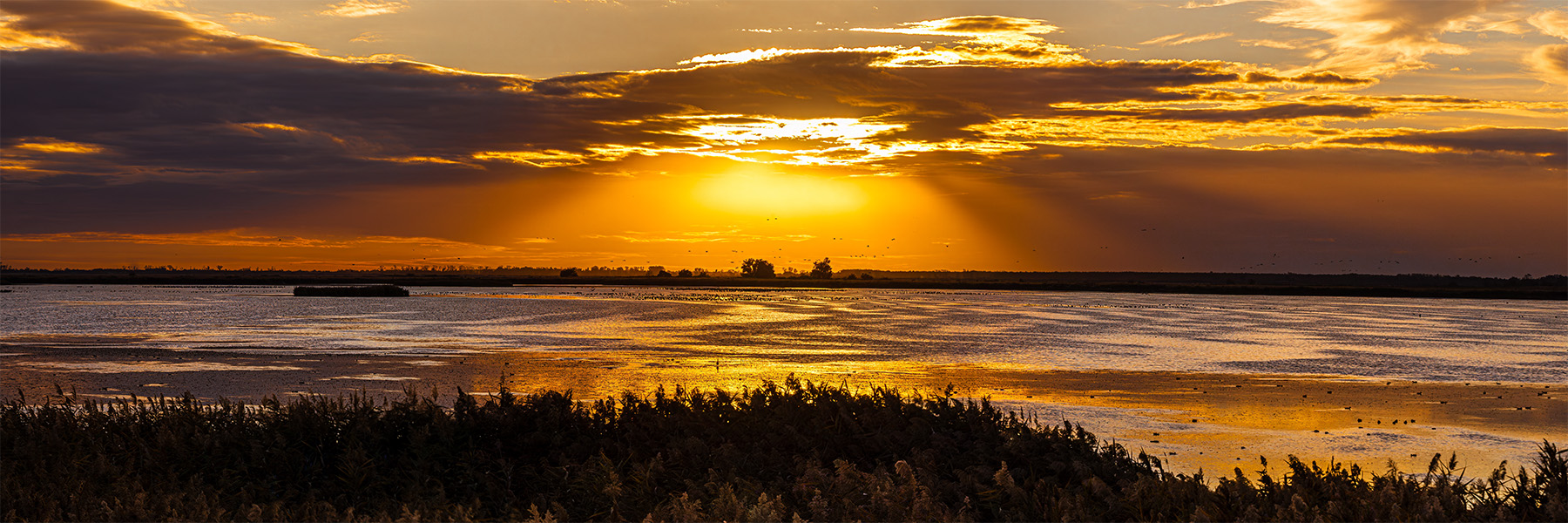
And the cranes were just coming...
Small groups at first. Then larger flocks. And then seemingly endless streams of birds.
The evening return of the cranes was completely different from watching them during the day. Thousands upon thousands flew toward the lake while an extraordinary wall of sound grew across the landscape. Tens of thousands of birds were calling to one another as new flocks continued to appear against the horizon.
And then the sunset exploded into color.
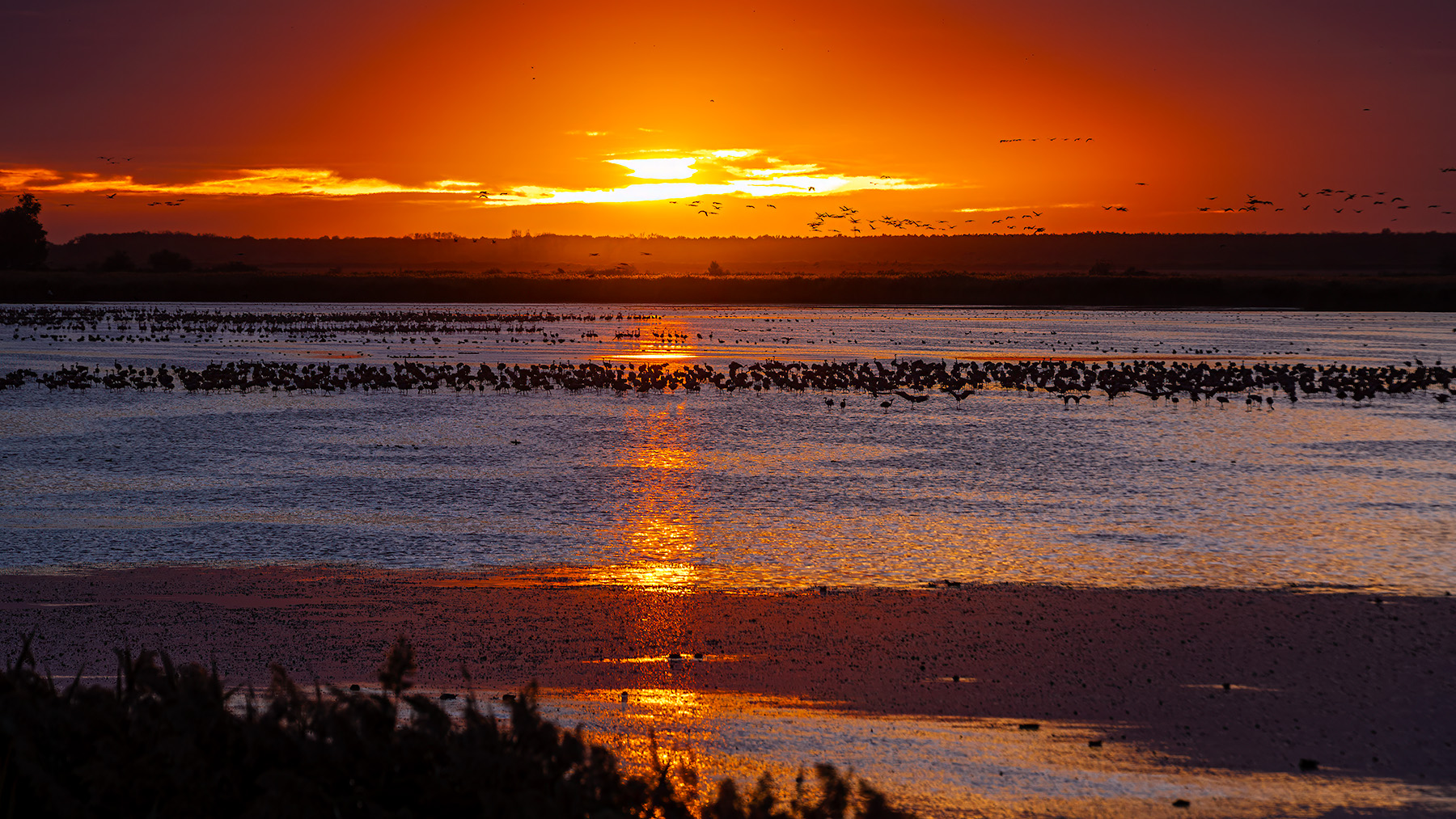
The clouds turned deep orange and red, the lake reflected the dying light, and in front of that glowing sky were the silhouettes of cranes arriving at their nighttime sanctuary. The combination of sound, movement, color, and atmosphere was almost overwhelming.
This was exactly what I had hoped to experience — and far more powerful than I had imagined.
Summary – 7,000 Frames of Crane migration
After sunset, we finally packed our equipment and began the journey home. We were exhausted after spending almost the entire day watching, waiting, and photographing, but our heads were filled with memories and our memory cards were even fuller.
My final count was approximately 7,000 photographs.
Sorting them will certainly not be a small task.
Yet this day of Crane migration taught me once again what I love about wildlife photography. You can prepare, plan, choose your equipment, study the light, and sit patiently in a hide for hours — but nature never follows your schedule.
I missed the most dramatic takeoff of the morning. My lens was too short for the portraits I wanted. We spent hours photographing little more than crows.
And still, I came home completely satisfied.
Because when thousands of cranes crossed that glowing red sky above Hortobágy, photography almost became secondary. For a few minutes, all that mattered was simply being there — watching one of nature's great autumn journeys unfold in front of me.
If you're interested, you can learn more about cranes, for example, here: mme.hu
If you’re as captivated by this topic as I am, don’t miss out on exploring more insights in my other topics and contents in my Portfolio!